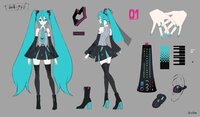
"Redefining the Image of Hatsune Miku": VOCALOID6 special interview [PART1]
(translated from the original interview in japanese)
https://realsound.jp/tech/2026/04/post-2365019.html

Crypton's Wataru Sasaki and artist LAM discuss "Redefining the Image of Hatsune Miku": From behind-the-scenes stories of 'VOCALOID6' development and illustration production to the true nature of the "subjectivity" embodied in Hatsune Miku.
Text and interview by Natsume Soga
Hatsune Miku V6, equipped with the VOCALOID6 vocal synthesis engine, has been released on April 14, 2026, by Crypton Future Media, Inc. While the significantly revamped functionality has garnered considerable attention, the equally impressive redesign of the package visuals has also generated significant buzz. Following in the footsteps of KEI, who created the iconic visual for the original Hatsune Miku, and iXima, who has long been responsible for package illustrations, the official visual for Hatsune Miku V6 is now handled by LAM, a popular illustrator who has consistently enjoyed strong support from listeners in the scene.
LAM is a creator with a long and deep connection to the VOCALOID scene, having illustrated numerous famous VOCALOID songs, including those by VOCALOID producer Kanaria, as well as handling the main visual and costume design for "Hatsune Miku 'Magical Mirai 2023'" and multiple visuals for "Project Sekai Colorful Stage! feat. Hatsune Miku". This time, a conversation between him and Wataru Sasaki, the planning and development producer at Crypton Future Media, Inc., the "creator of Hatsune Miku," has been realized.
Why did Sasaki choose LAM for the new package visuals this time? What kind of exchanges took place between the two during the production process? Including the secrets behind the software's development and the newly added features, we had Sasaki and LAM sit down and talk in detail about "Hatsune Miku's current position" at this time when "Hatsune Miku V6" is finally set to be released to the world. (Editorial Department)

Preventing the loss of "identity" due to AI—The behind-the-scenes story of the development of Hatsune Miku V6, a project that struggled to combine fluency with Miku's unique character.
--First of all, I'd like to ask Mr. Sasaki about the development process of 'Hatsune Miku V6'.
Sasaki: Looking back at our interactions with Yamaha, the conversation first started around spring 2022. The VOCALOID6 technology used this time is the engine that gained attention with AI Hibari Misora, but we understood it to be something that realistically reproduces human voices and is for dynamic vocalization like Showa-era enka singers. In other words, we thought it wouldn't fit in terms of bringing out the charm of Miku's singing. Normally, this is where the project would stall, but this time, we at Crypton and Yamaha worked closely together to explore how to reproduce Miku's singing voice and achieve a natural balance beyond that. I'll omit some of the technical aspects of sound engineering, but we re-analyzed and understood Hatsune Miku's voice, and focused a lot on enhancing her good points and adding natural singing nuances.
--In recent years, there has been a strong trend in the world of voice synthesis software to demand more human-like singing, but in the case of Miku, there is still a strong sense that her machine-like singing is a kind of identity. The statement that "AI engines don't fit Hatsune Miku" is about balancing these aspects, isn't it?
Sasaki: At first, the way VOCALOID6 behaved just didn't suit Miku. Not just the voice quality, but more than that, the speed of pronunciation, the rhythm of the words that is characteristic of a VOCALOID, and the uniform resonance of Miku's voice just didn't match. To explain Miku's mechanical resonance in more detail, the expression of her voice is uniform and there are no "dips". A human voice has what you might call waves, where it suddenly dips and then rises again, but Hatsune Miku doesn't have this "sudden dip" at all. So, as soon as we equipped Miku with the VOCALOID6 engine, the dips in her voice increased like a human's, and that would make her a "Miku whose tension is all over the place and wobbly". But that's not Hatsune Miku, is it? It's quite important for Miku that the tension of her voice doesn't change no matter what melody comes along.
--So, in a sense, it involved a "redefinition of the Hatsune Miku image". Does that mean that V6's Miku is significantly different from previous versions?
Sasaki: I think it depends on what aspects of Hatsune Miku you're listening to that you're either hearing as different or the same. Miku has changed quite a bit with V2, V3, and V4, and while the majority say "she hasn't changed at all", a very small number say "she's changed a lot" or "she's changed too much", so the impression is never really settled. Dwango also said that when a new version of Miku or VOCALOID comes out, they expect Nico Nico Douga to be excited and go to check the reactions, but they find it's mixed, and they're left wondering, "How should I interpret this?". Personally, I don't think there have been many instances where the evaluation or perception on the internet has clearly changed when there's a version upgrade. A few years later, you might hear things like, "I thought the cuteness of V2's voice was the best, but thinking about it calmly, V4X was the best". In that way, Hatsune Miku, who confuses the perceptions of so many people, is truly a "femme fatale" (laughs). She's a being that messes with everyone, including myself.
--That's what makes it so appealing and mysterious, isn't it? Even though everyone is talking about the same Hatsune Miku, the image of Hatsune Miku that each person sees is slightly different.
Sasaki: It's kind of like a syndrome, isn't it? The general public's stereotype of Hatsune Miku might be this, but I tend to end up talking about my own version of Miku, and that's what she is to me. In that sense, Hatsune Miku is a really hard character to understand, and I myself continue to struggle with that (laughs). I'm really happy that everyone has been so pleased with LAM's visuals this time around.
--Furthermore, I think one of V6's biggest improvements is that they can now sing English lyrics fluently.
Sasaki: Clearly, VOCALOID works are spreading overseas, and the number of creators is also increasing. For some works, overseas listeners make up nearly 80% of the audience. For people overseas, Hatsune Miku and VOCALOID are being accepted as something truly new. In order for it to become established as a culture in the future, we were aware that an easily accessible Hatsune Miku with English vocals was necessary. VOCALOID6 and those equipped with AI mechanisms are very good at multilingualization. With older generations of vocal synthesis technology, Japanese was easy to construct, but it was quite difficult to handle English and other languages, complex vowel sounds, and diverse consonants.
Recently, more and more Japanese people are listening to Japanese VOCALOID songs and smoothly accepting them saying, "Ah, VOCALOID!", but people in English-speaking countries often couldn't understand English VOCALOID songs, and it was even more difficult if the songs were fast-paced, which is characteristic of VOCALOID. I hope this will be one of the elements that can overcome that.
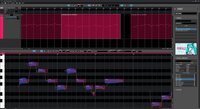
--When Miku first appeared in the 2000s, there were many people who listened to Vocaloid songs and said, "I don't understand what they're saying". It's somewhat moving to see the same phenomenon happening overseas now. In addition, I hear that V6 has some "hidden elements"...
Sasaki: In addition to the regular voice, Hatsune Miku V6 also features a soft and lovely singing voice called "Soft". The regular voice, "Original", has about 15% of Fujita Saki's recording data from Hatsune Miku Append blended in to give the sound more definition, but this is almost the same voice as Hatsune Miku when she was first released in 2007. On the other hand, "Soft" is a voice that has been tuned to sound more "Soft" by injecting the softness, sadness, and warmth of Fujita Saki's voice into the similar voices that have been released so far. We were really struggling with the name until the very last minute, right before the packages were printed. I think many Vocaloid producers will like the moody atmosphere of the "Soft" voice.
(translated from the original interview in japanese)
https://realsound.jp/tech/2026/04/post-2365019.html
Crypton's Wataru Sasaki and artist LAM discuss "Redefining the Image of Hatsune Miku": From behind-the-scenes stories of 'VOCALOID6' development and illustration production to the true nature of the "subjectivity" embodied in Hatsune Miku.
Text and interview by Natsume Soga
Hatsune Miku V6, equipped with the VOCALOID6 vocal synthesis engine, has been released on April 14, 2026, by Crypton Future Media, Inc. While the significantly revamped functionality has garnered considerable attention, the equally impressive redesign of the package visuals has also generated significant buzz. Following in the footsteps of KEI, who created the iconic visual for the original Hatsune Miku, and iXima, who has long been responsible for package illustrations, the official visual for Hatsune Miku V6 is now handled by LAM, a popular illustrator who has consistently enjoyed strong support from listeners in the scene.
LAM is a creator with a long and deep connection to the VOCALOID scene, having illustrated numerous famous VOCALOID songs, including those by VOCALOID producer Kanaria, as well as handling the main visual and costume design for "Hatsune Miku 'Magical Mirai 2023'" and multiple visuals for "Project Sekai Colorful Stage! feat. Hatsune Miku". This time, a conversation between him and Wataru Sasaki, the planning and development producer at Crypton Future Media, Inc., the "creator of Hatsune Miku," has been realized.
Why did Sasaki choose LAM for the new package visuals this time? What kind of exchanges took place between the two during the production process? Including the secrets behind the software's development and the newly added features, we had Sasaki and LAM sit down and talk in detail about "Hatsune Miku's current position" at this time when "Hatsune Miku V6" is finally set to be released to the world. (Editorial Department)
Preventing the loss of "identity" due to AI—The behind-the-scenes story of the development of Hatsune Miku V6, a project that struggled to combine fluency with Miku's unique character.
--First of all, I'd like to ask Mr. Sasaki about the development process of 'Hatsune Miku V6'.
Sasaki: Looking back at our interactions with Yamaha, the conversation first started around spring 2022. The VOCALOID6 technology used this time is the engine that gained attention with AI Hibari Misora, but we understood it to be something that realistically reproduces human voices and is for dynamic vocalization like Showa-era enka singers. In other words, we thought it wouldn't fit in terms of bringing out the charm of Miku's singing. Normally, this is where the project would stall, but this time, we at Crypton and Yamaha worked closely together to explore how to reproduce Miku's singing voice and achieve a natural balance beyond that. I'll omit some of the technical aspects of sound engineering, but we re-analyzed and understood Hatsune Miku's voice, and focused a lot on enhancing her good points and adding natural singing nuances.
--In recent years, there has been a strong trend in the world of voice synthesis software to demand more human-like singing, but in the case of Miku, there is still a strong sense that her machine-like singing is a kind of identity. The statement that "AI engines don't fit Hatsune Miku" is about balancing these aspects, isn't it?
Sasaki: At first, the way VOCALOID6 behaved just didn't suit Miku. Not just the voice quality, but more than that, the speed of pronunciation, the rhythm of the words that is characteristic of a VOCALOID, and the uniform resonance of Miku's voice just didn't match. To explain Miku's mechanical resonance in more detail, the expression of her voice is uniform and there are no "dips". A human voice has what you might call waves, where it suddenly dips and then rises again, but Hatsune Miku doesn't have this "sudden dip" at all. So, as soon as we equipped Miku with the VOCALOID6 engine, the dips in her voice increased like a human's, and that would make her a "Miku whose tension is all over the place and wobbly". But that's not Hatsune Miku, is it? It's quite important for Miku that the tension of her voice doesn't change no matter what melody comes along.
--So, in a sense, it involved a "redefinition of the Hatsune Miku image". Does that mean that V6's Miku is significantly different from previous versions?
Sasaki: I think it depends on what aspects of Hatsune Miku you're listening to that you're either hearing as different or the same. Miku has changed quite a bit with V2, V3, and V4, and while the majority say "she hasn't changed at all", a very small number say "she's changed a lot" or "she's changed too much", so the impression is never really settled. Dwango also said that when a new version of Miku or VOCALOID comes out, they expect Nico Nico Douga to be excited and go to check the reactions, but they find it's mixed, and they're left wondering, "How should I interpret this?". Personally, I don't think there have been many instances where the evaluation or perception on the internet has clearly changed when there's a version upgrade. A few years later, you might hear things like, "I thought the cuteness of V2's voice was the best, but thinking about it calmly, V4X was the best". In that way, Hatsune Miku, who confuses the perceptions of so many people, is truly a "femme fatale" (laughs). She's a being that messes with everyone, including myself.
--That's what makes it so appealing and mysterious, isn't it? Even though everyone is talking about the same Hatsune Miku, the image of Hatsune Miku that each person sees is slightly different.
Sasaki: It's kind of like a syndrome, isn't it? The general public's stereotype of Hatsune Miku might be this, but I tend to end up talking about my own version of Miku, and that's what she is to me. In that sense, Hatsune Miku is a really hard character to understand, and I myself continue to struggle with that (laughs). I'm really happy that everyone has been so pleased with LAM's visuals this time around.
--Furthermore, I think one of V6's biggest improvements is that they can now sing English lyrics fluently.
Sasaki: Clearly, VOCALOID works are spreading overseas, and the number of creators is also increasing. For some works, overseas listeners make up nearly 80% of the audience. For people overseas, Hatsune Miku and VOCALOID are being accepted as something truly new. In order for it to become established as a culture in the future, we were aware that an easily accessible Hatsune Miku with English vocals was necessary. VOCALOID6 and those equipped with AI mechanisms are very good at multilingualization. With older generations of vocal synthesis technology, Japanese was easy to construct, but it was quite difficult to handle English and other languages, complex vowel sounds, and diverse consonants.
Recently, more and more Japanese people are listening to Japanese VOCALOID songs and smoothly accepting them saying, "Ah, VOCALOID!", but people in English-speaking countries often couldn't understand English VOCALOID songs, and it was even more difficult if the songs were fast-paced, which is characteristic of VOCALOID. I hope this will be one of the elements that can overcome that.
--When Miku first appeared in the 2000s, there were many people who listened to Vocaloid songs and said, "I don't understand what they're saying". It's somewhat moving to see the same phenomenon happening overseas now. In addition, I hear that V6 has some "hidden elements"...
Sasaki: In addition to the regular voice, Hatsune Miku V6 also features a soft and lovely singing voice called "Soft". The regular voice, "Original", has about 15% of Fujita Saki's recording data from Hatsune Miku Append blended in to give the sound more definition, but this is almost the same voice as Hatsune Miku when she was first released in 2007. On the other hand, "Soft" is a voice that has been tuned to sound more "Soft" by injecting the softness, sadness, and warmth of Fujita Saki's voice into the similar voices that have been released so far. We were really struggling with the name until the very last minute, right before the packages were printed. I think many Vocaloid producers will like the moody atmosphere of the "Soft" voice.