• New accounts will normally be approved within 24 hours. We're currently having issues with our e-mail system. Anything requiring e-mail validation (2FA, forgotten passwords, etc.) must be changed manually by an Admin. Please reach out via the Contact Us form if you require any assistance.

VOCALOID Hatsune Miku VOCALOID6

MagicalMiku

♡Miku♡
Apr 13, 2018
3,159
Sapporo
Hatsune Miku VOCALOID6
Hatsune Miku Vocaloid 6 release date: April 14, 2026

logo_hatsune_miku_v6a.png
Achieve natural vocal performance with generated parameters.
Hatsune Miku sings fluently
with just lyrics and melody input.

640-220_02a.jpg
“HATSUNE MIKU V6” is a virtual singer software compatible with VOCALOID6, featuring Hatsune Miku’s voicebank (supports Japanese and English / Chinese support planned for a future update). Optimized for the VOCALOID:AI singing synthesis engine, it offers features such as intelligently adding breaths automatically, and automatically assigning English singing when you enter English spelling in the lyrics. In addition, because it uses machine learning to learn pitch transitions, volume transitions, timing, accents, and more, it excels at producing natural, organic vocal expressions. The generated vocals can then be edited flexibly; you can adjust expressions such as scoops, vibrato, and accents while referencing visual pitch and volume curves; create harmony parts using the TAKE function; and control vocal strength and firmness using the Expression parameter. It allows you to shape the singing flexibly, as if you were directly giving singing instructions to the virtual singer “Hatsune Miku.”

This product includes the original “HATSUNE MIKU V6” voicebank and “VOCALOID6 Editor Lite,” and also comes with Cubase LE featuring more than 1000 instrument sounds.

Voicebanks:
HATSUNE MIKU V6 Original
Supported Languages: Japanese, English, Chinese
- Chinese is planned to be provided as a free update, with a target release within 2026.
- In addition to the Original Voicebank, this product is planned to include one additional voicebank.

img_hatsune_miku_v6_credit2.jpg
Bundled Software
This product includes the feature-limited vocal editor VOCALOID6 Editor Lite, as well as Steinberg’s DAW software Cubase LE, along with an extensive collection of software instruments, sound content, and effects.
Cubase LE comes with over 1000 instruments, enabling your creativity to explore and compose for a wide range of music genres.
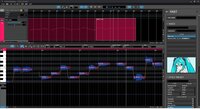
vocaloid6-screenhot.jpg
VOCALOID6 Editor Lite is a feature-limited vocal editor that lets you try out the singing voice. In addition to operating only in standalone mode (no plugin support), the maximum number of tracks you can use is limited to two in total: one Audio track plus either one VOCALOID:AI track, or one VOCALOID track.
To use the software without these limitations, please choose the “HATSUNE MIKU V6 STARTER PACK,” which includes “VOCALOID6 Editor.”
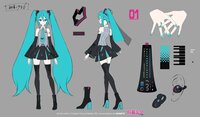
lam-design.jpg
pkg_miku-v6p1.png
pkg_miku-v6spp1.png
Sonicwire official website:
https://sonicwire.com/product/virtualsinger/special/miku-v6
https://sonicwire.com/product/virtualsinger/special/miku-v6-starter
Crypton official page:
https://ec.crypton.co.jp/pages/prod/virtualsinger/
https://ec.crypton.co.jp/pages/prod/virtualsinger/mikuv6/
https://ec.crypton.co.jp/pages/prod/virtualsinger/mikuv6_starter/
Amazon JP product page:
starter pack (with Cubase LE and full Vocaloid 6 editor):
https://www.amazon.co.jp/dp/B0GNYVN7RN/
voice bank only (with Cubase LE and Vocaloid 6 Lite editor):
https://www.amazon.co.jp/dp/B0GNZD3LW3/
support page:
https://sonicwire.com/support/prod
https://www.vocaloid.com/en/vocaloid6/
https://www.steinberg.net/cubase/le/
https://o.steinberg.net/en/support/downloads/cubase_15.html
https://www.steinberg.help/v/u/cubase_ai_15_0_operation_manual_en.pdf

previous versions:
https://sonicwire.com/product/virtualsinger/special/superpack
https://sonicwire.com/product/virtualsinger/special/mikuv4x
https://sonicwire.com/product/virtualsinger/special/mikuv4c
https://sonicwire.com/product/virtualsinger/special/mikuv3
https://ec.crypton.co.jp/pages/prod/virtualsinger/cv01a
https://ec.crypton.co.jp/pages/prod/virtualsinger/cv01
 
Last edited:

Bookworm2

Your friendly neighborhood Vocaloid nerd
Coming soon, April 31st, 2026. /j
2026? No, minimum 2028.
That said, I am excited for Miku V6. Who knows, maybe this means updates for the rest of the cryptonloids! I wonder if the tone will be similar to a previous voicebank, or if it will be unique. Or is there an option for A.I. tracks similar to appends? I really don't know much about V6. Either way, I look forward to hearing it!
 

MagicalMiku

♡Miku♡
Apr 13, 2018
3,159
Sapporo
2026? No, minimum 2028.
That said, I am excited for Miku V6. Who knows, maybe this means updates for the rest of the cryptonloids! I wonder if the tone will be similar to a previous voicebank, or if it will be unique. Or is there an option for A.I. tracks similar to appends? I really don't know much about V6. Either way, I look forward to hearing it!
The main issue of Vocaloid6 is that, while it's a powerful engine with lots of interesting features, the change of tone is so much different compared to Vocaloid 3 and Vocaloid 4, so there are some issues that need to be solved in order to get a good tone that can be compared with the previous Vocaloid versions.
It has already been hinted last year that also Rin, Len, Luka, Meiko and Kaito might get Vocaloid 6 (together with NT2), but for now the focus is on Miku Vocaloid 6, because then it'll be easier to start from a good base for any future development :miku_sakura_lili:
Those issues are the main reason why some years ago Crypton started development on NT, and I think Vocaloid 6 will especially be used for english and chinese voice banks of Miku and other Piapro characters. It's good that the producers will have more choices, and it all depends on what kind of "sound signature" they are aiming for. For example, some producers, even the most popular ones, still use today Miku V2 and her Append<3
 

InstallGentoo

プロデューサー
May 7, 2021
124
Heaven
miku.band
some producers, even the most popular ones, still use today Miku V2 and her Append<3
That makes sense, V2 and append are legendary voicebanks. V2 is the voicebank of Miku in the popular section, and appends I recognize it as the cult classic that held up the trance and edm side of the fandom.
These days her NT banks are competing with synthV and Teto and it apears to me Teto is more popular due to it being relatively newer and shinier. Or maybe it's percived and I just been seeing more of her than I personally would like to see (no offense to the teto fans). So in terms of "cutting edge" and "future" perceptions of the public I think CFM is in the undertow in this race for the general public at the moment. V6 would be the answer to that I think, so it would make sense for them to try and get it just right when it releases.
 

sunnyp4rk

Guuumiiiii
Jan 23, 2020
500
20
Midwest US (hell)
I think the thing I'm most interested in is how the XLS for English and Chinese will sound for her. V6 is already iffy on quality for those languages, depending on the voicebank. I want to see if it really is feasible for Miku to have only one voicebank that can sing in all three languages, rather than 3 different products.
 

JikyuVox

Music Producer
Apr 8, 2018
52
28
FL, USA
linktr.ee
I think the thing I'm most interested in is how the XLS for English and Chinese will sound for her. V6 is already iffy on quality for those languages, depending on the voicebank. I want to see if it really is feasible for Miku to have only one voicebank that can sing in all three languages, rather than 3 different products.
Agreed! That's why I want Miku V6.
 
  • Like
Reactions: MagicalMiku

Blue Of Mind

The world that I do not know...
Apr 8, 2018
866
some producers, even the most popular ones, still use today Miku V2 and her Append<3
That makes sense, V2 and append are legendary voicebanks. V2 is the voicebank of Miku in the popular section, and appends I recognize it as the cult classic that held up the trance and edm side of the fandom.
These comments have just made me think if Crypton had just kept reissuing V2 Miku in some way (and even V1 Meiko and Kaito and V2 Rin, Len and Luka), a lot of fans would have been less upset over the years. With every engine upgrade and attempt to keep their V1 and V2 tones, ironically the Cryptonloids sound less like their original banks. (This is my biggest issue with Miku NT - it tries to sound like V2 Miku but it's off. It's hard to explain to newer fans, but if you've been listening to Miku for so long like I have, you can tell immediately.) Alas, Yamaha has long stopped supporting V2, and leaving such an ancient program up for sale would increase compatibility issues with newer OSs. (How do V1 and V2 work on Windows 11, anyway?)
 

sunnyp4rk

Guuumiiiii
Jan 23, 2020
500
20
Midwest US (hell)
These comments have just made me think if Crypton had just kept reissuing V2 Miku in some way (and even V1 Meiko and Kaito and V2 Rin, Len and Luka), a lot of fans would have been less upset over the years. With every engine upgrade and attempt to keep their V1 and V2 tones, ironically the Cryptonloids sound less like their original banks. (This is my biggest issue with Miku NT - it tries to sound like V2 Miku but it's off. It's hard to explain to newer fans, but if you've been listening to Miku for so long like I have, you can tell immediately.) Alas, Yamaha has long stopped supporting V2, and leaving such an ancient program up for sale would increase compatibility issues with newer OSs. (How do V1 and V2 work on Windows 11, anyway?)
If they did what other companies did to port older voicebanks to newer versions of Vocaloid (Gumi V2 -> V3 through her Native vb, any V3 that simply had growl added to their voicebank when ported to V4 without rerecording, etc.), I would be fine with that (maybe this is just me wanting an easier way to buy Luka V2 lol).

NT's biggest issue IMO is that it's choppy, while any Vocaloid version of Miku hasn't been affected like that before. I'd love to know WHY NT is so choppy. I'd love to also know why they think it's ok to release a product of that quality (I know we've had Gumi English before, but English is a more difficult language to make a concat vb for).
 

Blue Of Mind

The world that I do not know...
Apr 8, 2018
866
If they did what other companies did to port older voicebanks to newer versions of Vocaloid (Gumi V2 -> V3 through her Native vb, any V3 that simply had growl added to their voicebank when ported to V4 without rerecording, etc.), I would be fine with that (maybe this is just me wanting an easier way to buy Luka V2 lol).

NT's biggest issue IMO is that it's choppy, while any Vocaloid version of Miku hasn't been affected like that before. I'd love to know WHY NT is so choppy. I'd love to also know why they think it's ok to release a product of that quality (I know we've had Gumi English before, but English is a more difficult language to make a concat vb for).
Admittedly, Miku V2 had choppy transitions as well, but people forgave it in hindsight because she was the second V2 ever released after Sweet Ann, and the very first Japanese V2. Nowadays, some people find V2's choppiness charming, but obviously that's nostalgia over older software. I agree that a modern software like NT shouldn't be having choppy results. At least Gumi English V3's choppiness can be manually fixed within Vocaloid if you look up tutorials (though apparently, it's time-consuming to do so).

From what I understand by reading tutorials, it plays ok with win 11, and actually gets a bug fixed if run on 11. I don't have any V1 voicebanks though, so I can't tell that much.
Ohhh, that's good! I've heard some horror stories in the past about V1 crashing on Win7 and 10, so I was curious how V2 was running on other modern OSs.
 

sunnyp4rk

Guuumiiiii
Jan 23, 2020
500
20
Midwest US (hell)
Admittedly, Miku V2 had choppy transitions as well, but people forgave it in hindsight because she was the second V2 ever released after Sweet Ann, and the very first Japanese V2. Nowadays, some people find V2's choppiness charming, but obviously that's nostalgia over older software. I agree that a modern software like NT shouldn't be having choppy results. At least Gumi English V3's choppiness can be manually fixed within Vocaloid if you look up tutorials (though apparently, it's time-consuming to do so).
Ah, in my defense, I've never played around with V2 Miku lol. I guess it can be excused since she DID come out in 2007 (almost 2 decades ago), so older software having issues is a normal thing. Like you said, modern software like NT should not be as choppy as it currently is.
 

WacoWacko39

VFlower devotee
Jul 22, 2025
168
20
Florida. U.S.A
I'm not certain if this the appropriate or best place to ask, but what is and "AI" voicebank? How is it any different from a more standard one? I am under the impression SynthVs are aforementioned. I'm fond of SynthV, though I'm only really familiar with Tetos 'sound'. And a fan I am, I can't help but feel she often sounds 'samey'; I would be remised, if for vertical movement they sacrificed lateral movement
 

IO+

Resonance47
Apr 22, 2021
307
I hope her voice character doesn’t change much. The SP version has me a bit concerned.
Piapro NT already has inherent issues like abrupt silence, choppiness, and a tendency to randomly produce a thick vocal in an unpleasant way. This issues has been around since V2, though she’s improved a lot in terms of sound quality and overall usability—especially in V4, where she sounds really good.

Honestly, I find Miku V4 to be the peak of voice quality—what Miku should sound like.
 

lIlI

Staff member
Administrator
Apr 6, 2018
1,215
Kanru's walls
I'm not certain if this the appropriate or best place to ask, but what is and "AI" voicebank? How is it any different from a more standard one? I am under the impression SynthVs are aforementioned. I'm fond of SynthV, though I'm only really familiar with Tetos 'sound'. And a fan I am, I can't help but feel she often sounds 'samey'; I would be remised, if for vertical movement they sacrificed lateral movement
I'll do my best to explain!

As context for anyone who doesn't know, traditional vocal synths are made using the 'concatenative' method. A singer is hired to sing all the individual letter sounds of a language, called phonemes, at various pitches. These short recordings of vowels and consonants are then downloaded onto your computer when you buy a concatenative Vocaloid. Then, the Vocaloid software puts the phoneme recordings together to make the words you type into the program. It is a simple method that allows you to make a program that can say any word without you needing to record every word in the dictionary.

AI vocal synths use machine learning to create the voicebank. Instead of recording phonemes, the singer sings whole songs. Then you label where each phoneme is in each song, so the software knows how to read them. After labelling, the AI software learns the sonic qualities that give the singer their unique timbre and pronunciation. These rules are saved into a much smaller file, then applied dynamically by the software, making the output sound like the singer. Rather than simply playing a pre-recorded sound, the software calculates how a word should be sung by applying the rules it has learnt from 'listening' to the singer. Rather like a robotic impressionist. There's a lot more complex stuff happening under the hood, for example, you can feed the AI data from multiple different singers to increase the range of one voice, and make them sing fluently in multiple languages by mixing the 'rules' for English with the 'rules' for a non-native singer's timbre.

However, AI does not sacrifice your ability to make a voice sound unique. In fact, I believe AI voices are easier to edit and can achieve greater variety in performance compared to concatenative voices, because you're not restricted to the singer's recordings. If you push their settings, you can make one AI voice sound like multiple completely different people! The reason AI usage online can be samey is a by-product of convenience. AI voices sound natural out of the box, so producers feel less of a need to edit the results. Consequently, a lot of producers use AI voices at their default settings.

Most concatenative voicebanks sound a lot less polished by default, and require more hard work to sound natural. When you tune a concatenative voice, you can hear a big improvement in its results, which motivates producers to edit them by hand. This forces more users to develop their own unique style.
 

Users Who Are Viewing This Thread (Users: 0, Guests: 1)